I do not remember exactly why I walked into a Quaker meeting for first time earlier this year. I do remember being struck by the peaceful atmosphere of the simple room behind a hectic high street, the way the silent worship created space in my mind, and the willingness of Friends to chat about politics after the meeting. When I heard there was an introductory course starting for newcomers across London, I signed up to discern if there was a space for me in this community.
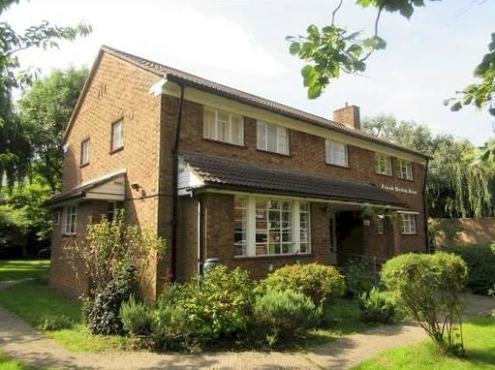
We met at Bunhill Fields on a Monday evening, an historical oasis of calm in the centre of the city. This first session focused on Quaker worship, and we were presented with a flow chart to help us determine when it is appropriate to speak – to deliver “ministry” – during meetings for worship. The first question in the flow chart was, “Is this a message from the Holy Spirit”? If one does not perceive one’s thought to be a message from the Holy Spirit, I learned, one must not speak. I suddenly felt that maybe my attending Quaker meetings had all been a mistake. I have never believed in a Holy Spirit, let alone one that speaks through me. What was I thinking joining a religious community?
After mulling this over in my mind, I decided to share my doubts with the group. I was not ready to end my short-lived Quaker journey on the basis of a flow chart without first ensuring that I was understanding the guidelines correctly. I was relieved to find that my doubts were met with openness and interest. Others shared their own questions and doubts, none of which were taken to be disqualifying. While we did not reach any final conclusions about the Holy Spirit, I left the meeting feeling both calm and enlivened, both autonomous and connected.
The second meeting focused on Quaker beliefs and lifestyle and, again, I carried in my doubts about whether I could square my belief that some circumstances justify armed resistance with the well-known Quaker commitment to pacifism. Our guest speaker reassured me, explaining that there is a range of opinion amongst Quakers on the question of pacifism. But surely, I objected, the Quaker commitment to a simple lifestyle would be disqualifying for me. (Only the day before I had ordered a large number of new books without first checking if they were in the library!) No, once again, my confession about the books was met with curiosity and humour as we discussed the various intentions one might have in acquiring books.
As the Spring weather warmed up, we were able to start leaving the front and back doors to the meeting house open. The breeze and the gentle sound of birds wafted through the space as we sat and talked. Our third meeting was about Quaker business, and we grappled with the principle that Quakers must reach unity in order to make a decision. Some of us questioned whether a diverse group could ever really reach unity without supressing the views of dissenters. It was only after the session, when our guide Josh sent out the minute on Gaza from the Yearly Meeting, that I grasped how this was possible.
When we met for our final session, we began by each sharing something we had learned so far. One Friend said, with relief, that she had learned that “not all Quakers are political activists.” I echoed, “not all Quakers are pacifists,” and a third Friend added, “not all Quakers are religious.” One might question whether, with all of this inclusivity, Quakerism is devoid of content. But I do feel that I have gathered some essence of the Society of Friends. It is within that feeling I was left with after our first session: a harmonisation of peace with critical questioning, of individuality with community. There is much more for me to understand about Quakers, but I now understand enough to keep coming back.